



The numbers behind the programme speak for themselves: 25 participating companies, 50 mentorship sessions – both individual (1-to-1) and group sessions, delivered across 8 key topics essential for export and internationalisation, and supported by 13 experienced mentors. Behind these figures lies a well-structured educational journey, a strong collaborative effort, and a tangible impact on the entrepreneurs who chose to strengthen their export capabilities through the ENTRANT project.
As we approach the completion of the mentorship programme implemented under ENTRANT – Entrepreneurship aNd TRade Abilities iN plaTform (WP3 – Training Programme), it is clear that the initiative has succeeded in equipping entrepreneurs with practical tools and strategic clarity for entering and scaling in international markets.
A Structured Journey Across 8 Core Modules
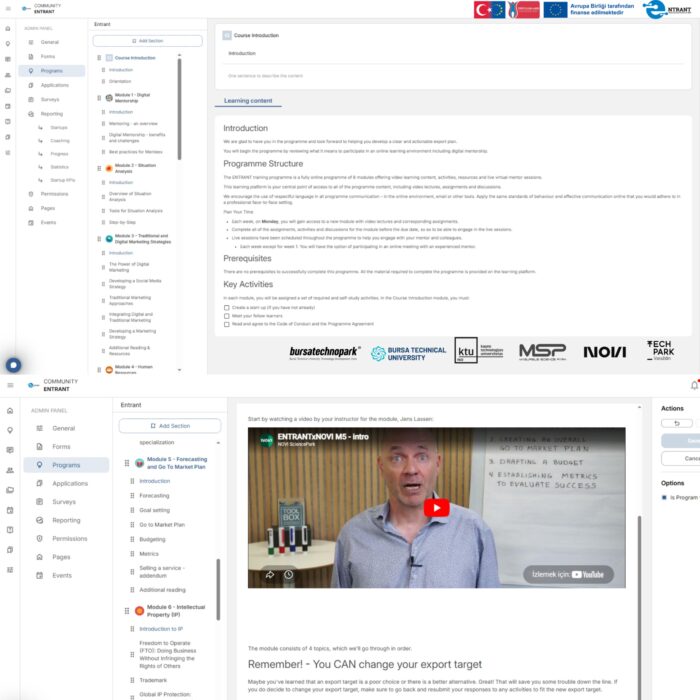
The programme was designed around eight complementary modules, each contributing to the development of a coherent and actionable internationalisation plan. Every module followed a clear structure:
- A short introduction (video or text),
- Learning materials (videos, texts, interactive resources),
- 2–4 practical activities, including one essential key deliverable,
- Dedicated mentorship sessions.
All learning activities were hosted on the Babele platform, where participants accessed content, completed assignments, interacted in forums, formulated questions, and engaged in mentorship sessions before progressing to the next module.
From Analysis to Scaling – The Programme Logic
Module 2 – Situation Analysis laid the foundation for the entire journey. Companies conducted in-depth assessments using tools such as SWOT, PEST, Ansoff, and Beachhead frameworks, identified their key needs, and selected a concrete export target. This chosen market became the central case study used throughout the subsequent modules.
Module 3 – Traditional and Digital Marketing focused on market research fundamentals, marketing strategy components, the SCOPE framework, and the 7Ps model. Participants incorporated cultural insights through tools such as cultural mapping models and developed tailored marketing action plans aligned with their export targets.
Module 4 – Human Resources addressed strategic decisions regarding international hiring, expatriation, and internal reorganisation aligned with export ambitions.
Module 5 – Forecasting and Evaluating Export Success introduced forecasting techniques, market penetration theory, export budgeting, and the development of realistic timelines for entering new markets.
Module 6 – Intellectual Property explored fundamental IP rights, protection strategies in a global and digital context, and planning for securing IP rights or ensuring freedom to operate internationally.
Module 7 – Risk Management in Exporting guided companies in identifying potential risks, drafting risk maps, and developing contingency plans to mitigate uncertainties.
Finally, Module 8 – Cascading Export Success focused on evaluating strategies, defining SMART objectives and KPIs, revising previously developed plans, and identifying potential future export markets.
The Role of Mentorship: Applied Guidance and Tailored Feedback
A central pillar of the programme has been its mentorship component. The 13 mentors, recommended by science parks based on their professional expertise, have played an active and hands-on role in supporting the participating entrepreneurs.
Each mentor was responsible for:
- Delivering four mentorship sessions (one hour each),
- Reviewing assignments and preparing sessions,
- Providing targeted, practical feedback tailored to each company’s chosen export market.
Mentorship sessions were designed as interactive working spaces. Entrepreneurs brought forward their analyses, draft strategies, budgets, and risk assessments, while mentors offered critical insights, strategic direction, and clarification. In Module 2, for instance, discussions revolved around validating the situation analysis and refining export target selection—setting the tone for all subsequent strategic decisions.
The combination of individual (1-to-1) and group sessions created both personalised guidance and opportunities for peer learning and exchange of best practices.
Practical Learning with Tangible Outputs
The programme followed a progressive learning model. Participants:
- Reviewed the learning materials,
- Completed assignments and engaged in forum discussions,
- Formulated questions for mentors,
- Participated in mentorship sessions,
- Integrated feedback before moving to the next module.
The emphasis was consistently placed on producing concrete deliverables: situation analyses, marketing strategies, HR reorganisation plans, export budgets, market entry timelines, IP protection plans, risk maps, contingency plans, and performance indicators. As a result, each participating company is building a comprehensive and structured export strategy portfolio by the end of the programme.
Impact and Forward Outlook
As we move closer to the completion of the ENTRANT mentorship programme, its impact becomes increasingly visible. By integrating analytical thinking, marketing strategy, financial planning, legal awareness, and risk mitigation into a unified export approach, the 25 participating companies are strengthening their readiness to compete internationally in a strategic and sustainable manner.
ENTRANT demonstrates that combining e-learning with structured, hands-on mentorship creates a powerful framework for developing export competencies. While the numbers highlight the scale of the initiative, its true value lies in the transformation of knowledge into strategic decisions and concrete market actions.
This milestone marks not an end, but the consolidation of capabilities that will continue to support participating companies as they expand beyond borders and contribute to a more connected and internationally oriented entrepreneurial ecosystem.
Leave a Reply